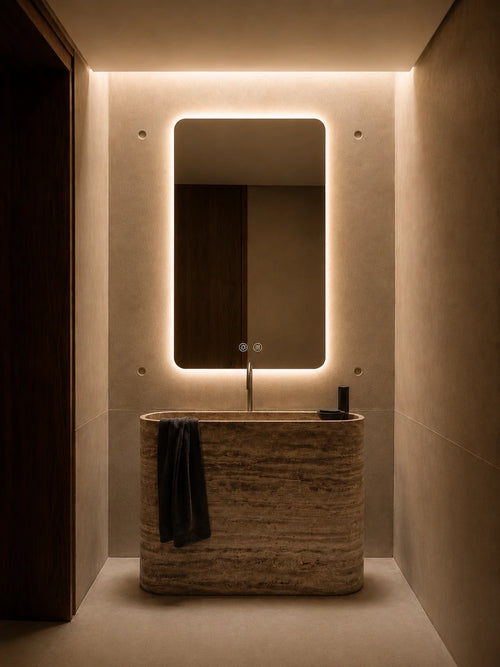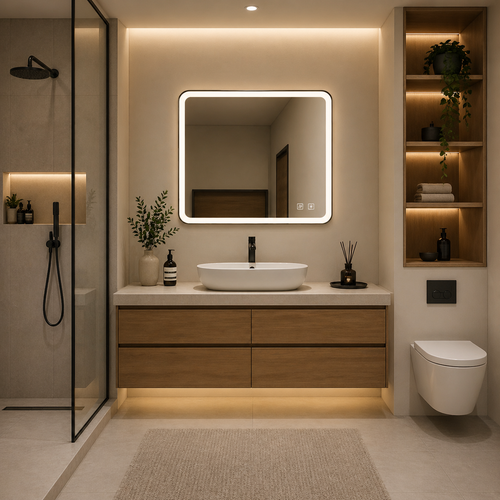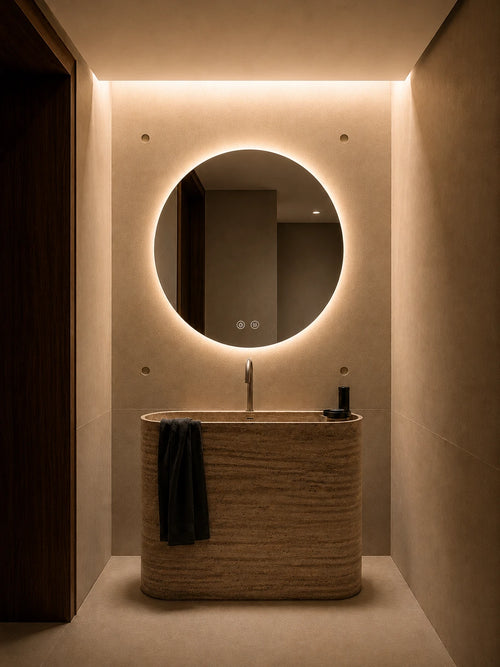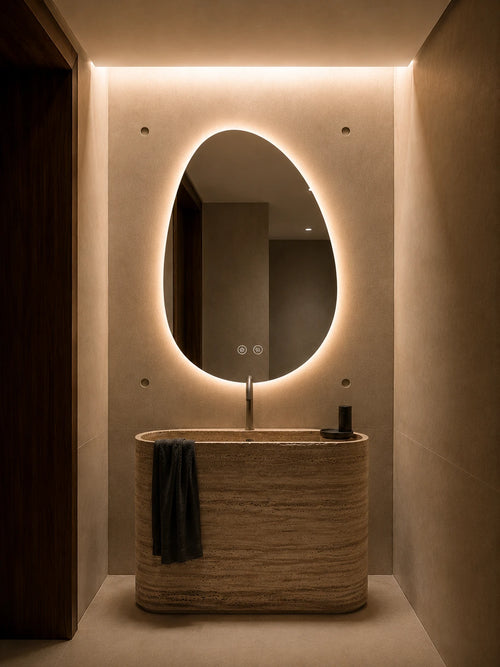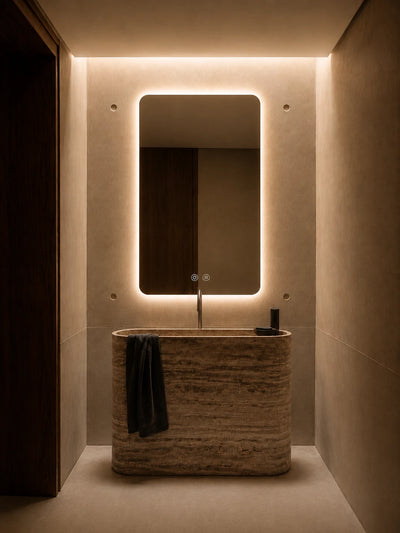
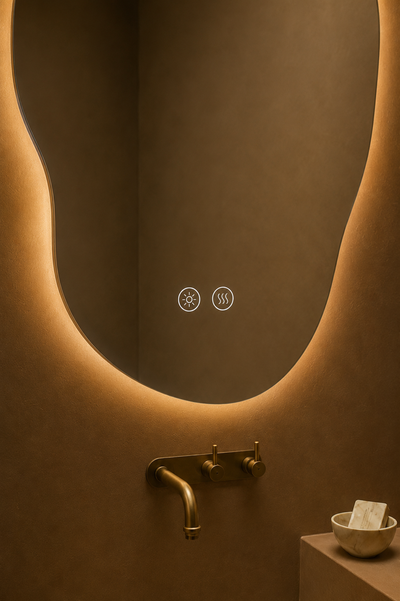
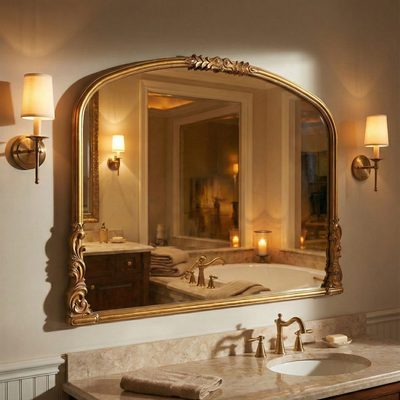
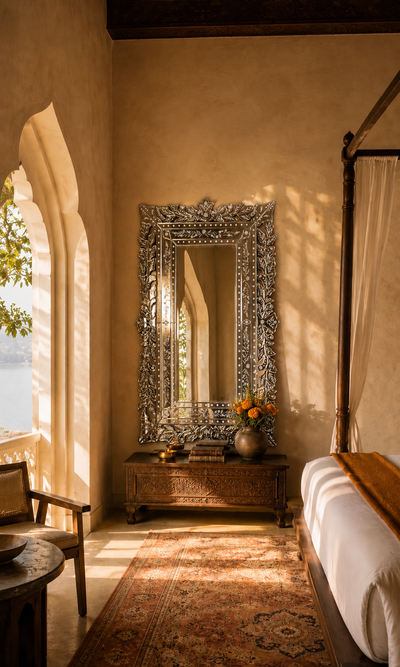
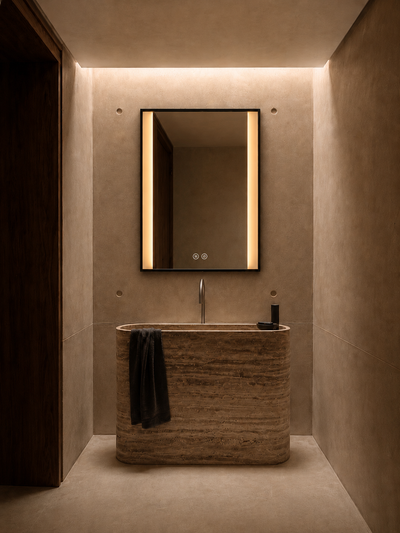

Choosing the right lighting can make your bathroom more comfortable and improve your daily grooming routine. The best lighting for bathroom mirror depends on how you use the space, your interior design and the type of illumination you prefer. Warm white creates a relaxing atmosphere, neutral white offers balanced illumination, and cool white provides a crisp appearance. Understanding the best lighting for bathroom mirror options will help you select a suitable colour temperature for your needs. Whether you are installing a new LED mirror or upgrading your existing bathroom, this guide explains the differences between warm, neutral and cool white lighting.
Understanding LED Mirror Colour Temperature
Colour temperature describes the appearance of light and is measured in Kelvin (K). It determines whether the illumination looks warm, neutral or cool. Choosing the right colour temperature is especially important for mirror lighting for makeup, as balanced illumination helps you see skin tones and makeup shades more accurately.
The most common options for bathroom mirrors include:
-
3000K – Warm White: Produces a soft, yellowish glow that creates a relaxing atmosphere.
-
4000K – Neutral White: Offers balanced illumination without appearing too yellow or blue.
-
6000K–6500K – Cool White: Creates a crisp, bright appearance that resembles daylight.
When selecting an LED mirror colour temperature, consider your daily routine and bathroom interiors.
|
Colour Temperature |
Appearance |
Suitable For |
|
3000K |
Warm and soft |
Relaxing ambience |
|
4000K |
Natural and balanced |
Daily grooming |
|
6000K |
Bright and cool |
Detailed grooming |
3000K vs 4000K Bathroom Mirror: Which Is Better?
The choice between 3000K and 4000K depends on whether you prioritise ambience or functional lighting. Both options have advantages for residential bathrooms, especially when paired with a frameless mirror that complements the bathroom's modern design and lighting arrangement.
3000K Warm White Lighting
Warm white lighting creates a comfortable atmosphere with a slightly golden appearance. It works particularly well with wooden vanities, beige tiles, marble finishes and warm-coloured bathroom accessories.
Benefits of 3000K lighting:
-
Creates a relaxing environment for evening routines.
-
Complements warm-toned bathroom interiors.
-
Provides soft and comfortable illumination.
-
Works well as decorative lighting.
However, warm lighting can make certain makeup shades appear different from how they look in natural daylight. Therefore, choosing the best budget mirror with balanced lighting can help improve visibility and make everyday grooming and makeup application more convenient.
4000K Neutral White Lighting
Neutral white provides balanced illumination without creating an excessively yellow or blue appearance. It is a practical option for bathrooms used throughout the day.
Its advantages include:
-
Helps provide clear facial illumination.
-
Supports everyday grooming and skincare.
-
Makes makeup application more convenient.
-
Complements modern bathroom interiors.
|
Feature |
3000K |
4000K |
|
Light appearance |
Warm white |
Neutral white |
|
Atmosphere |
Relaxing |
Clean and balanced |
|
Makeup application |
Less colour-neutral |
More suitable |
|
Interior style |
Warm interiors |
Modern interiors |
|
Daily grooming |
Suitable |
Highly suitable |
For homeowners comparing 3000k vs 4000k bathroom mirror options, 4000K is generally a practical starting point for everyday use, while 3000K is ideal for creating a softer atmosphere.
Warm vs Cool LED Mirror: Understanding the Difference
The warm vs cool LED mirror comparison involves more than just brightness. Each lighting option creates a different visual experience.
Warm lighting makes the bathroom feel comfortable and inviting. It is particularly suitable for evening routines and interiors with warm finishes.
Cool lighting creates a sharper appearance and can be useful for detailed grooming. However, very cool lighting may feel harsh when combined with bright ceiling lights and reflective bathroom surfaces. When choosing the best mirror for bathroom, consider adjustable lighting options that provide clear visibility without creating excessive glare.
Neutral white offers a middle ground between these options. It provides a clean appearance without the strong yellow or blue tones.
If multiple people use the bathroom, consider an LED mirror with adjustable colour temperature. This allows users to switch between lighting modes according to their preferences.
What Is CRI for Bathroom Lighting and Why Does It Matter?
Colour temperature is not the only specification worth checking. Another important factor is the Colour Rendering Index (CRI).
The CRI for bathroom lighting measures how accurately a light source reveals colours compared with a reference light source. It is measured on a scale from 0 to 100. Generally, a higher CRI means colours appear more natural.
This is particularly important when applying makeup, selecting skincare products or checking your appearance.
|
CRI Rating |
Colour Appearance |
Suitability |
|
Below 80 |
Less accurate |
Basic lighting |
|
80–89 |
Good |
General bathroom use |
|
90–94 |
Excellent |
Grooming and makeup |
|
95–100 |
Very high accuracy |
Colour-sensitive tasks |
For bathroom vanity mirrors, CRI 90 or higher is a useful recommendation, especially when accurate skin tones and makeup colours matter.
Remember that CRI and colour temperature are different specifications. A 3000K light can have a high CRI, just as a 4000K light can have a lower CRI. Check both before purchasing an LED mirror.
Which Is the Best Lighting for Bathroom Mirror Makeup?
Makeup application requires lighting that reveals skin tones and cosmetic shades accurately. Poorly positioned lights can create shadows around the eyes, nose and chin.
The best lighting for bathroom mirror makeup should provide balanced illumination without making colours appear significantly different.
Consider these factors:
1. Choose Neutral White Lighting
A 4000K setting is a practical choice for everyday makeup. It provides balanced illumination and avoids the strong yellow appearance of warm white.
2. Look for High CRI
Choose an LED mirror with CRI 90 or higher. Better colour rendering helps you evaluate foundation, blush and lipstick shades.
3. Consider Front Lighting
Front-lit mirrors direct illumination towards your face, making them useful for grooming and makeup. Backlit mirrors primarily create a decorative glow around the wall.
4. Avoid Uneven Shadows
A single overhead light may create shadows under the eyes and chin. Consider a mirror with evenly distributed front lighting or suitable side fixtures.
5. Check Brightness Controls
Dimmable lighting allows you to adjust brightness for different activities. A brighter setting can help with detailed grooming, while softer illumination is suitable for evening routines.
How to Choose the Right LED Bathroom Mirror Lighting?
Before purchasing an LED bathroom mirror, consider the following factors:
Match Lighting with Bathroom Interiors
Warm lighting complements wooden finishes, beige walls and warm-coloured accessories. Neutral lighting works well with white, grey and contemporary bathroom designs.
Consider Your Daily Routine
If you regularly apply makeup, shave or follow a skincare routine, prioritise balanced illumination and high CRI. For a relaxing atmosphere, warm lighting may be more suitable.
Check Front-Lit and Backlit Designs
Front-lit mirrors provide direct facial illumination, while backlit designs create a soft glow around the mirror. Some models combine both lighting arrangements.
Look for Adjustable Colour Temperature
Some LED mirrors allow you to switch between warm, natural and cool white settings. This is useful when different family members prefer different lighting options.
Artessa offers LED mirrors with multiple lighting modes. For example, the Shadex LED mirror features adjustable colour temperature, touch controls, dimming and a memory function. These features allow users to adjust the illumination according to their requirements.
Check Installation Requirements
Always check the mirror's electrical specifications and suitability for bathroom installation. Use a qualified electrician and follow the manufacturer's instructions for safe connections.
Common Bathroom Mirror Lighting Mistakes to Avoid
Avoid these common mistakes when choosing your mirror lighting:
-
Choosing only by appearance: Consider functionality along with design.
-
Ignoring CRI: A suitable Kelvin rating does not guarantee accurate colour rendering.
-
Selecting excessively cool lighting: Very cool white can feel harsh in residential bathrooms.
-
Using only backlighting for makeup: Backlighting may not provide sufficient direct facial illumination.
-
Mixing different colour temperatures: Inconsistent lighting can affect the overall bathroom appearance.
-
Ignoring dimming options: Adjustable brightness makes a mirror more versatile.
Final Thoughts
Warm white creates a relaxing atmosphere, neutral white supports everyday grooming, and cool white provides crisp illumination. For most bathrooms, 3000K and 4000K are practical choices. Consider CRI, brightness and lighting placement before purchasing. Explore Artessa's LED mirror collection to find a design that suits your bathroom and daily requirements.
Frequently Asked Questions
Q1. What is the best colour temperature for bathroom mirror lighting?
A 4000K neutral white colour temperature is a practical choice for bathroom mirror lighting. It provides balanced illumination for daily grooming, skincare and makeup without appearing excessively yellow or blue.
Q2. Is 3000K or 4000K better for bathroom mirrors?
3000K is better for creating a warm, relaxing atmosphere, while 4000K provides more balanced illumination for everyday grooming and makeup. The ideal option depends on your lighting preferences and bathroom interior.
Q3. Is warm white or cool white better for makeup?
Neutral white or daylight-like lighting is generally more suitable for makeup because it helps you see skin tones and cosmetic shades more accurately. Choosing an LED mirror with CRI 90 or higher can further improve colour accuracy.
Q4. What CRI is recommended for bathroom mirror lighting?
A CRI of 90 or higher is recommended for bathroom vanity mirrors, especially for makeup application, skincare and grooming. Higher CRI lighting helps colours appear closer to their natural shades.
Q5. Are adjustable colour temperature LED bathroom mirrors worth buying?
Yes, adjustable colour temperature LED mirrors are useful because they allow you to switch between warm, neutral and cool lighting. Dimming and memory functions also provide greater convenience for different grooming activities and lighting preferences.