LED Bathroom Mirror Size Guide: Find the Perfect Fit Above Your Wash Basin

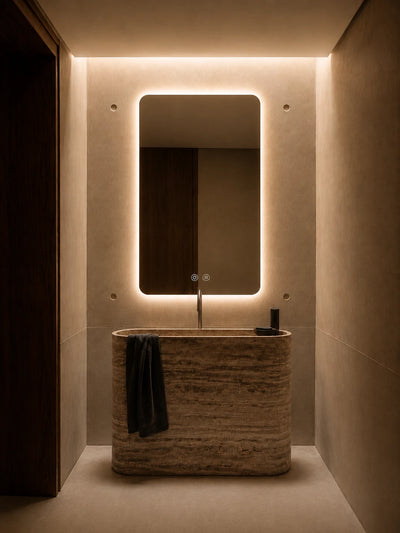
Choosing the right bathroom mirror is important for creating a comfortable and well-balanced wash area. A mirror that is too small may not provide enough visibility, while an oversized one can make the vanity look crowded. This LED bathroom mirror size guide explains how to select suitable mirror dimensions based on your wash basin, vanity width and available wall space. Whether you are renovating a compact bathroom or designing a spacious master bathroom, understanding the LED bathroom mirror size guide will help you make a practical choice. From selecting the correct width to deciding the installation height, this guide covers everything you should consider before purchasing an LED mirror.
Why Is the Right LED Bathroom Mirror Size Important?
An LED bathroom mirror serves two purposes: it provides a clear reflection and adds functional lighting to the wash area. Choosing the right led mirror for bathroom use also depends on its dimensions, as they determine how comfortably it fits into your bathroom design.
Here are some reasons why choosing the right size matters:
-
Better proportions: A properly sized mirror complements the vanity instead of overpowering it.
-
Comfortable grooming: Appropriate dimensions provide sufficient visibility while shaving, applying makeup or following your skincare routine.
-
Improved lighting: Integrated LED lights can provide additional illumination around the wash basin.
-
Space utilisation: The right dimensions help maintain a clean appearance, particularly in smaller bathrooms.
-
Interior aesthetics: A well-positioned mirror can make the wash area look more organised and visually appealing.
Before selecting a design, measure the vanity width, countertop height and available wall space. These measurements will help you narrow down suitable options.
How to Choose the Right Bathroom Mirror Width for Vanity?
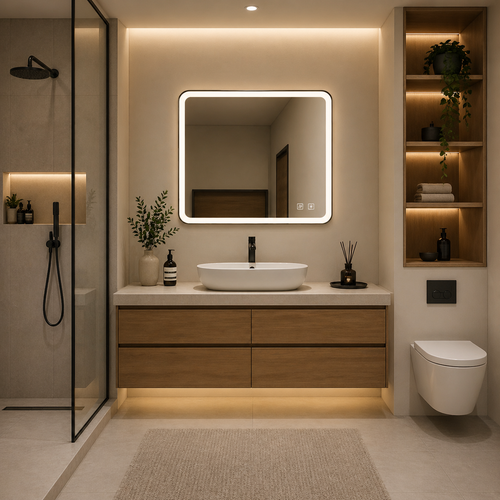
The width of your vanity is one of the most important factors when selecting a mirror. Ideally, the mirror should be slightly narrower than or approximately equal to the vanity width. This creates a balanced appearance and keeps the mirror visually connected to the wash basin. An Auren LED Bathroom Mirror can complement this setup while adding modern styling and functional illumination to your bathroom.
The following measurements can help you understand which dimensions to consider:
|
Vanity Width |
Suggested Mirror Width |
|
24 inches |
20–24 inches |
|
30 inches |
24–30 inches |
|
36 inches |
28–36 inches |
|
48 inches |
36–48 inches |
|
60 inches |
42–60 inches |
These are general recommendations, not strict rules. For example, a wider mirror may work well when the bathroom has sufficient wall space and a minimalist design.
Also, consider the position of wall lights, electrical fittings and storage cabinets. Leaving adequate space around the mirror prevents the wash area from looking overcrowded.
24 Inch Vanity Mirror Size: What Works Best?
A 24-inch vanity is commonly used in powder rooms, guest bathrooms and compact apartments. Since the available space is limited, choosing proportionate mirror dimensions is particularly important.
A 24 inch vanity mirror size of approximately 20–24 inches in width can complement this type of vanity. For height, you can consider 24–32 inches, depending on the available wall area.
A few useful suggestions include:
-
Choose a rectangular mirror for a simple and space-efficient appearance.
-
Consider a round or arched design if you want to introduce softer shapes.
-
Avoid mirrors that extend too close to adjacent walls.
-
Check the distance between the mirror and the basin tap before installation.
A vertically oriented mirror can also work well in compact bathrooms because it offers a comfortable reflective area without requiring excessive horizontal space.
30 Inch Vanity Mirror Size: Finding the Right Fit
A 30-inch vanity provides more flexibility than a smaller wash area. It allows homeowners to experiment with different mirror shapes while maintaining a balanced bathroom layout.
When considering a 30 inch vanity mirror size, a width of approximately 26–30 inches is a practical starting point. A height between 28 and 36 inches may also work, depending on the ceiling height and installation position.
For example, a rectangular LED mirror centred above a 30-inch vanity creates a neat and symmetrical appearance. If you prefer a decorative look, a rounded rectangular or arched mirror can introduce a contemporary touch.
Remember that the mirror does not always need to match the vanity's exact width. A slightly narrower design can leave space for wall-mounted accessories and create a more open appearance. A Shadex LED Bathroom Mirror can be a suitable choice for achieving this balance while enhancing the bathroom's overall look.
What Is the Ideal Bathroom Mirror Height Above Sink?
Width is only one part of mirror selection. Its vertical position also determines how comfortable it will be to use.
The ideal bathroom mirror height above sink depends on the countertop, basin design, faucet height and the average eye level of the people using it.
As a general guideline:
-
Leave approximately 5–10 inches between the countertop and the bottom edge of the mirror.
-
Position the mirror so that its centre is close to the users' eye level.
-
Check whether taller users can comfortably see their faces.
-
Maintain sufficient clearance between the mirror and ceiling.
-
Consider the height of vessel basins and wall-mounted faucets.
These measurements can be adjusted according to your bathroom layout. For example, a vessel basin sits higher than a standard integrated basin, so the mirror may need to be mounted accordingly.
A useful tip is to mark the proposed mirror dimensions on the wall using masking tape. Stand in front of the wash basin and check the reflection before finalising the installation position.
How to Select the Right LED Mirror Size for Wash Basin?
The LED mirror size for wash basin should provide enough reflective space without making the surrounding wall look crowded. The basin dimensions, vanity width and mirror shape should work together.
Here are some illustrative size combinations:
|
Bathroom Setup |
Suggested Mirror Dimensions |
|
Compact wash area |
45W × 60H cm |
|
Small vanity |
50W × 70H cm |
|
Medium vanity |
60W × 90H cm |
|
Large wash area |
90W × 120H cm |
These are suggested proportions rather than fixed sizing requirements.
Artessa offers different LED mirror dimensions to suit different bathroom layouts. For example, its Shadex range includes sizes such as 60H × 45W cm, 70H × 50W cm, 90H × 60W cm and 120H × 90W cm. Selected models also support custom sizing.
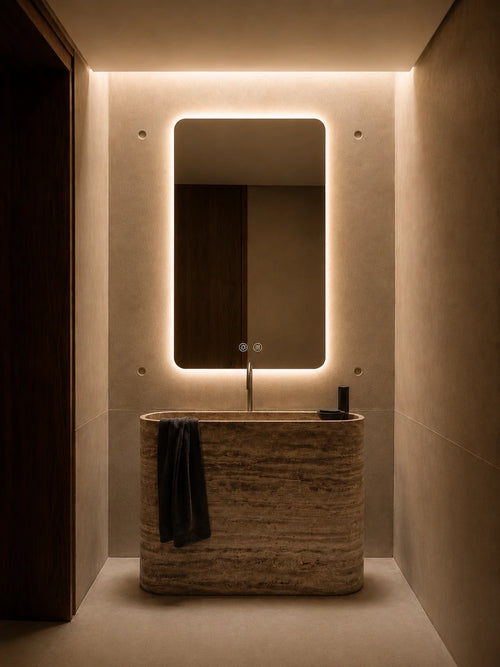
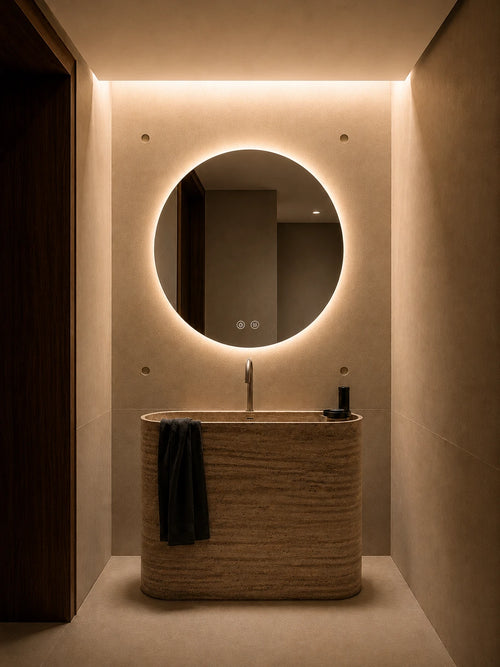
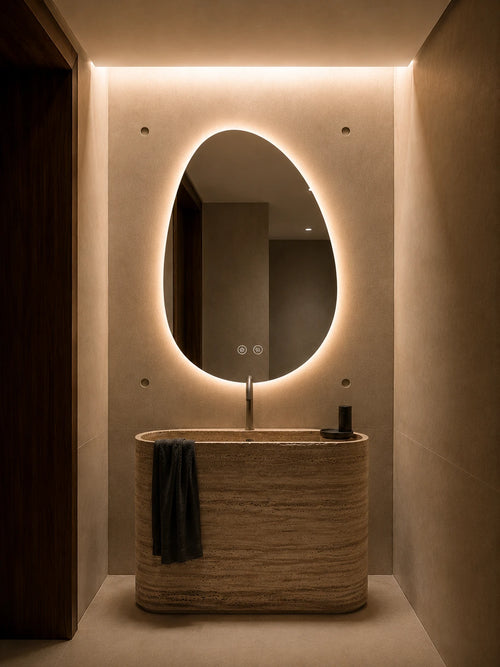
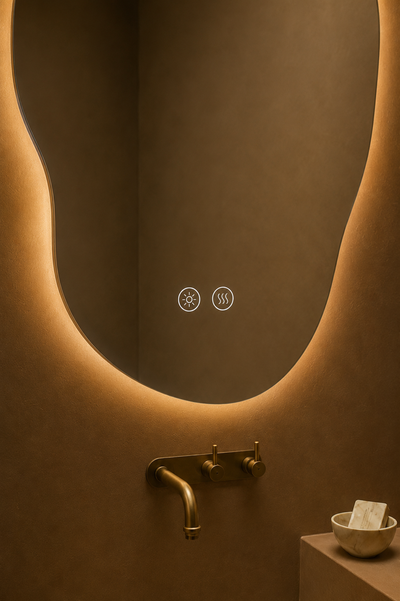
When comparing designs, consider the lighting arrangement, mirror shape and available wall space. A front-lit mirror can provide useful illumination for grooming, while a backlit design creates a soft glow around the wall. Some models combine both lighting styles.
You can explore the Artessa LED bathroom mirror collection to compare available sizes and designs.
Important Features to Consider Apart from Mirror Size
Once you have decided on the dimensions, consider the features that will make the mirror convenient for everyday use.
1. LED Lighting Options
LED bathroom mirrors are available in front-lit, backlit and dual-lit designs.
-
Front-lit: Direct lighting that helps illuminate the face during grooming.
-
Backlit: Creates ambient illumination around the mirror.
-
Dual-lit: Combines direct and ambient lighting for a layered appearance.
Choose the lighting arrangement according to your daily requirements and bathroom lighting.
2. Anti-Fog Functionality
Mirrors often become foggy after a hot shower, making it difficult to use them immediately. An integrated defogger helps reduce condensation on the treated mirror surface.
This feature is particularly useful in bathrooms with limited ventilation.
3. Mirror Shape and Frame
Rectangular mirrors suit modern and minimalist interiors, while round and oval designs create a softer appearance. Arched and asymmetrical mirrors can add a decorative element to the bathroom.
You can also consider framed or frameless designs depending on the vanity finish and other bathroom fittings.
4. Installation and Electrical Requirements
Before purchasing, check the mirror's weight, mounting system and electrical requirements. Larger mirrors may require stronger wall support and appropriate mounting hardware.
LED mirrors should be connected according to the manufacturer's instructions. It is advisable to use a qualified electrician for bathroom electrical installations.
Common Mistakes to Avoid When Choosing an LED Bathroom Mirror
Even a premium mirror may not look right if its dimensions or installation position are unsuitable. Avoid these common mistakes:
-
Ignoring vanity measurements: Always measure the countertop before choosing the mirror width.
-
Installing the mirror too high: This can make everyday grooming uncomfortable.
-
Overlooking faucet clearance: Tall taps may interfere with the mirror's lower edge.
-
Choosing only by appearance: Consider reflective area and lighting functionality as well.
-
Ignoring wall space: Check the position of cabinets, lights and other accessories.
-
Forgetting installation requirements: Plan the mounting support and electrical connection before installation.
Taking measurements beforehand can save time and help you avoid unnecessary changes after purchasing the mirror.
Final Thoughts
Choosing a suitable bathroom mirror requires more than selecting an attractive design. You need to consider vanity width, mirror height, countertop clearance and available wall space to create a comfortable wash area.
This LED bathroom mirror size guide can help you compare different dimensions and understand which proportions work for your bathroom. Whether you have a compact 24-inch vanity or a wider 30-inch wash area, the right mirror should provide sufficient visibility while complementing the surrounding interiors.
Artessa offers different LED mirror designs, standard dimensions and custom-size options on selected models. Explore the available collections, compare the measurements and select a mirror that suits your bathroom layout and everyday requirements.
Frequently Asked Questions
Q1. How do I choose the right LED bathroom mirror size guide for a small bathroom?
For a small bathroom, measure the vanity width and available wall space first. A mirror approximately 20–24 inches wide can suit a 24-inch vanity. This LED bathroom mirror size guide recommends choosing dimensions that provide sufficient reflection without overcrowding the wall.
Q2. What is the ideal bathroom mirror height above sink?
A practical starting point is to leave around 5–10 inches between the countertop and the bottom of the mirror. However, the bathroom mirror height above sink should also account for faucet clearance and users' eye levels.
Q3. What is the recommended 30 inch vanity mirror size?
A mirror approximately 26–30 inches wide and 28–36 inches tall is a useful starting point for a 30-inch vanity. The final 30 inch vanity mirror size depends on the available wall space and bathroom design.
Q4. How do I determine the bathroom mirror width for vanity?
Measure the vanity from one side to the other and consider a mirror that is slightly narrower or approximately equal in width. The bathroom mirror width for vanity should also leave sufficient clearance for surrounding fixtures.
Q5. What is the right LED mirror size for wash basin?
The LED mirror size for wash basin depends on the basin and vanity dimensions. For a compact wash area, 45W × 60H cm may work well, while larger vanities can accommodate wider mirrors. Always check the available wall space before purchasing.