LED Mirrors With Defoggers: Is the Upgrade Worth the Price?

Artessa's defogger add-on is listed at ₹500, a modest number beside the cost of a bathroom mirror. Whether it is money well spent depends on a more useful question: how often do you need a clear reflection immediately after a shower? For someone who shaves in that moment, the feature may remove a recurring irritation. For a mirror in a shower-free powder room, its value is less obvious.
An LED mirror with a defogger makes sense when it serves a regular need, fits the chosen mirror and provides useful heated coverage. It should be selected with the same care as lighting and dimensions, rather than added simply because it appears in the options.
Understand the feature before pricing it
A mirror can mist when moisture in the air condenses on its cooler surface. A defogger warms an area of the glass to help reduce that condensation. Its useful effect is local: the heated section may clear while other parts of the mirror remain misted.
That distinction is central to the purchase. A large mirror with a smaller heated area is not necessarily a poor choice, provided that area sits where you need to see your face. Conversely, a feature described only as “anti-fog” may leave important questions unanswered about coverage and operation.
Ask for the heater's approximate coverage and placement in the selected size. A diagram is more useful than an assurance that the mirror has a defogger. If two people use a broad mirror from different positions, find out whether the warmed area serves both positions or mainly the centre.
Identify the moment you are buying convenience for
Picture a weekday morning in a shared bathroom. One person has just finished a hot shower; another needs the basin before leaving for work. If mist regularly interrupts that sequence, a defogger has a clear purpose. You are paying to make a specific part of the routine easier.
Now consider a bedroom dressing mirror. Even if the product can be supplied with a defogger, the room may never create the condensation that makes it useful. The same money may be better directed towards a more suitable size, improved lighting or another feature that affects everyday use.
A guest bathroom falls between these examples. If it contains a shower and frequently accommodates overnight visitors, straightforward defogging may be welcome. If it is used mainly for handwashing, prioritise the mirror's proportions and the quality of the basin lighting. Match the feature to observed use rather than an imagined ideal bathroom.
Check what is already included
The Artessa defogger add-on was ₹500 when checked on 7 September 2026. However, several mirror descriptions also mention a built-in defogger. The add-on listing alone does not establish that every LED mirror requires a separate purchase, or that the add-on fits every design.
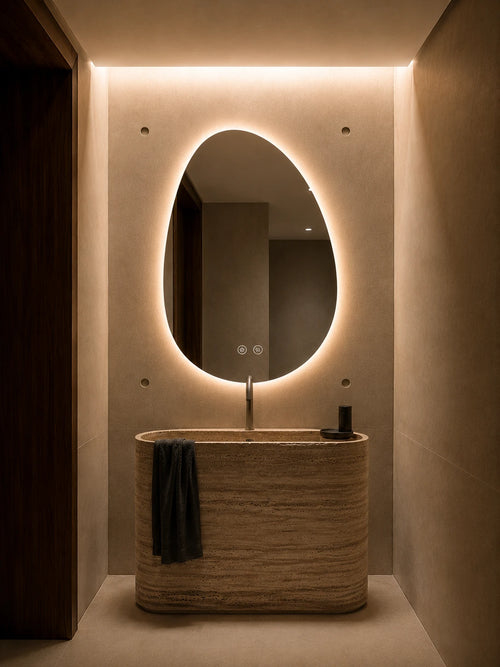
Avelis, for example, describes a built-in defogger alongside touch controls, adjustable brightness and three light temperatures. Its 60H × 45W cm variant was listed at ₹4,999 on 7 September 2026. Confirm the complete selected configuration rather than assuming either that every feature is charged separately or that every available option is included in the base price.
This matters when comparing sellers as well. A cheaper mirror without the desired feature and a more expensive mirror that includes it are not directly comparable. Write down the final specification and total quoted amount. Feature additions may not be reflected in variant base prices, so a product-page starting price is only the beginning of that comparison.
Heated coverage should suit the users
Consider where people stand at the basin and which part of the reflection they use. A single user centred on a narrow vanity has different needs from two users sharing a wide counter. The overall mirror may frame the room beautifully while the defogger serves only one central section.
Height matters too. If household members differ considerably in height, ask whether the heated area can serve their normal viewing positions. Do not move the mirror solely to align a heater while making the basic reflection uncomfortable. The mirror's everyday position should work first, with the feature specified around that requirement.
On an unusually shaped mirror, a stated overall width and height does not reveal the shape of its heated area. Confirm coverage specifically for the selected model and size. This is particularly useful when ordering a custom configuration, where assumptions based on a smaller standard version may not hold.
Controls can determine whether the feature gets used
Find out how the defogger is activated. It may have a separate control or operate in conjunction with another function; these behaviours should be confirmed for the actual configuration. Do not assume that it senses shower use or switches on automatically because a product description uses broad language about post-shower clarity.
Ask whether there is a timer or automatic shut-off, and how the controls behave after power is interrupted. If those functions are not documented, treat them as unconfirmed. A feature that requires a particular sequence should be easy for the people using the bathroom to understand.
For a shared home, explain the operation once the mirror is installed. Guests should not have to experiment with unfamiliar symbols while the bathroom is full of steam. A clear, reachable interface is often more useful than adding functions that nobody remembers how to operate.
Keep ventilation in the plan
A defogger helps with the mirror surface; it does not remove humidity from the bathroom. Continue to plan appropriate ventilation for the room. If moisture lingers on walls and other surfaces, a clear patch of mirror does not resolve that wider issue.
Avoid using the feature as evidence that the mirror can be installed anywhere near water. The electrical suitability of the chosen position needs to be assessed independently. Have a qualified professional review the product requirements, connection and location, particularly when replacing a plain mirror with an electrically powered one.
Ask about access for future servicing before surrounding the mirror with fitted cabinetry. A careful installation makes routine use pleasant while allowing components to be reached later if necessary. Do not assume a defogger can be added to an existing mirror without checking compatibility and the manufacturer's installation requirements.
Decide what would make the purchase worthwhile
There is no need to invent an exact financial return for a convenience feature. Instead, identify how frequently it would help and whether the confirmed heated area meets that need. If you regularly wait for a usable reflection after showering, the upgrade has a practical argument in its favour. If condensation rarely affects you, it can remain a lower priority.
Do not sacrifice the correct dimensions or suitable facial lighting to obtain a defogger. Those qualities shape every use of the mirror, while the heater serves a particular condition. The most balanced purchase gets the fundamentals right, then adds convenience where it makes a meaningful difference.
Review Avelis if you want an organic LED mirror whose description includes defogging, or check the defogger add-on when configuring another design. Confirm inclusion, compatibility and heated coverage together so the upgrade earns its place in your bathroom.
Mirrors mentioned in this guide
-

Avelis, Oval LED mirror -

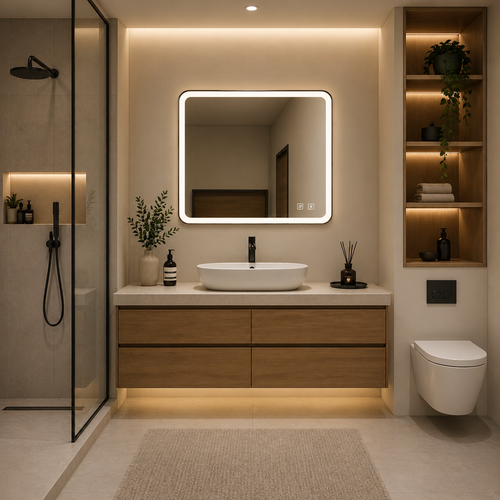
Mirelle, Black-framed LED mirror -

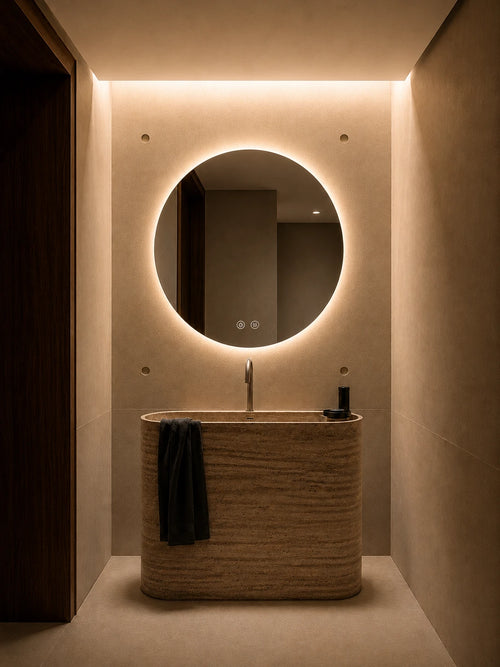
Oblio, Rounded touch-sensor LED mirror -

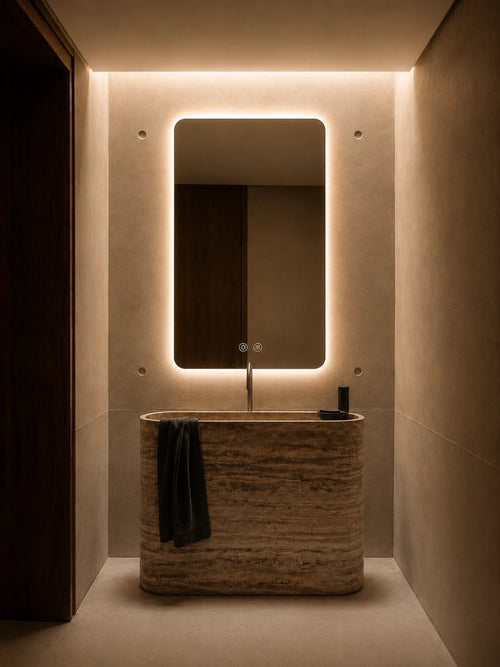
Kairo, LED bathroom mirror
Browse the full range: Vanity Essentials · Studio Essentials · Trade & bulk orders.