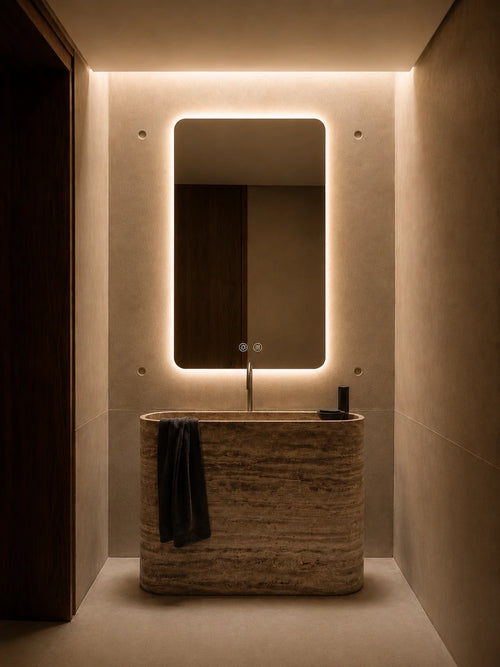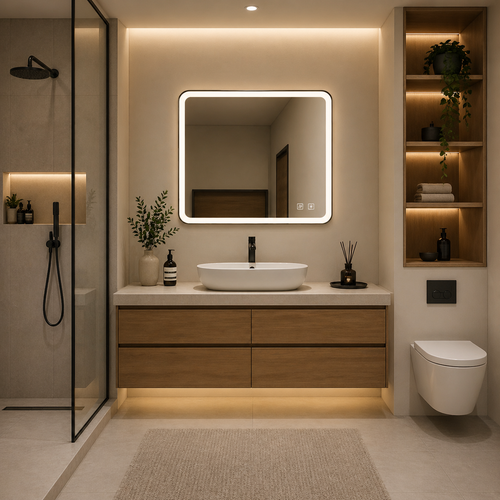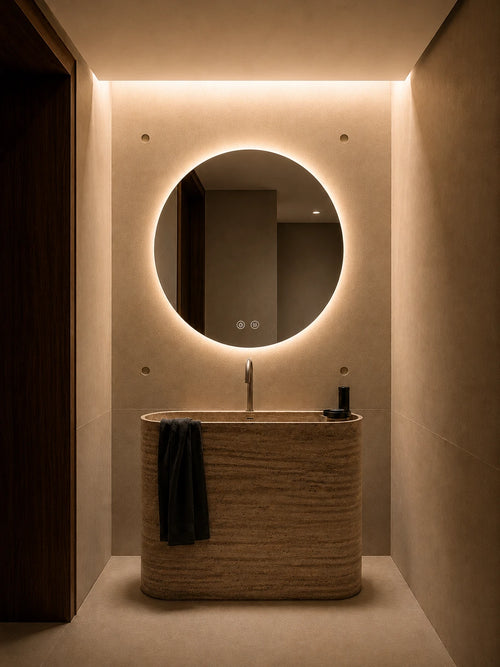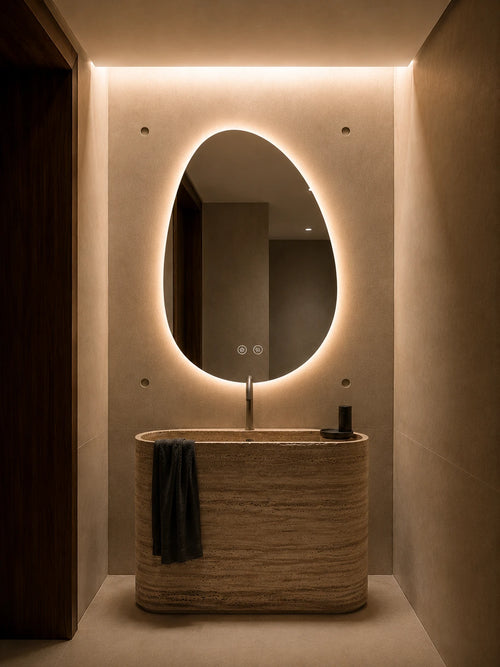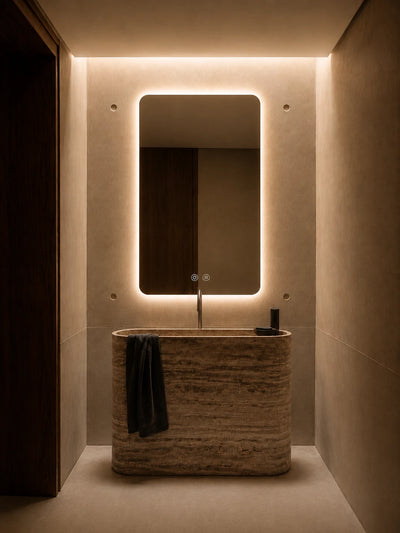
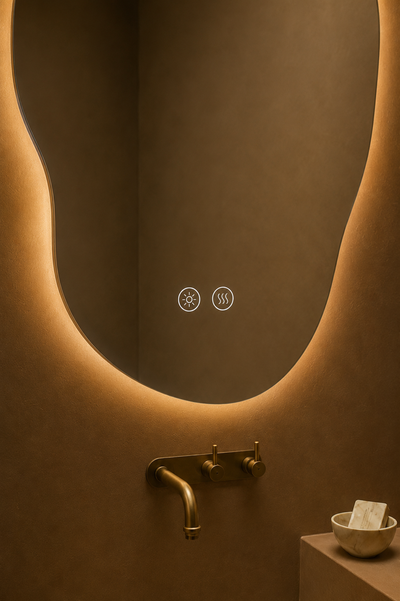
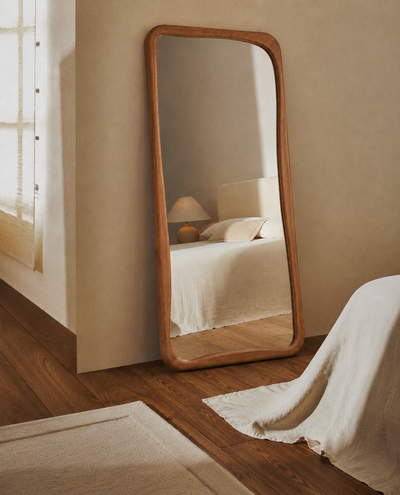
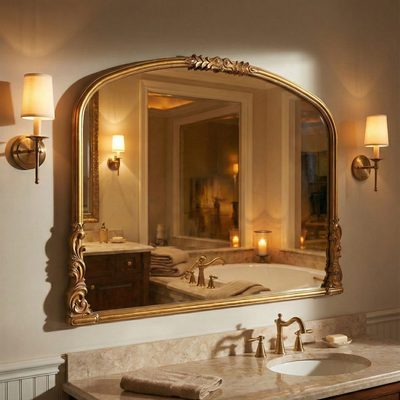

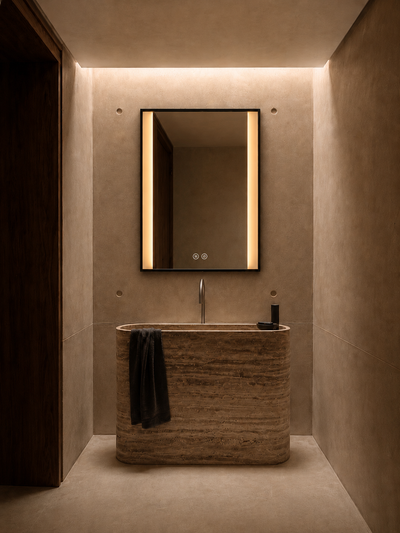

An LED bathroom mirror improves everyday grooming and gives your vanity a modern finish. But an attractive result depends on secure mounting, the right electrical supply, and a comfortable viewing position. This guide explains how to install LED bathroom mirror models safely, what electrical work requires a professional, and what to budget in India.
Before choosing a model, browse Artessa’s LED mirror collection for shapes, sizes and lighting styles suited to your bathroom.
How to Install LED Bathroom Mirror Units: Step-by-Step
If you've searched for “how to install led mirror,” start by checking the manufacturer's instructions. Different products use different brackets, drivers and connection methods.
Step 1: Check the Mirror and Wall
Unpack the mirror on a padded surface. Inspect the glass, cable and supplied fixings; note its weight, dimensions and mounting orientation. Ensure the wall can carry the load. Hollow walls may need specialised anchors or structural reinforcement.
Step 2: Plan the Position
Centre the mirror over the basin where practical, checking the tap, cabinet doors and comfortable eye level. Mark the outline with masking tape and confirm the location of any concealed pipes or cables before drilling.
Step 3: Fix the Mounting Hardware
Use a spirit level, suitable tile drill bit and manufacturer-specified brackets or cleats. Knowing how to install LED bathroom mirror panels on tiled walls also means choosing fixings appropriate to the structure behind the tiles—not simply the tile itself.
Step 4: Arrange the Power Supply
Ask a qualified electrician to verify the approved connection method, supply voltage, circuit protection and bathroom location. Do not make or modify mains connections yourself.
Step 5: Hang the Mirror
With help for larger mirrors, secure the glass on its brackets. Confirm it sits level and cannot slip. Never trap or pinch a cable against the wall.
Step 6: Test the Features
Once the electrician has checked and energised the installation, test the lights, touch switch, dimming and defogger (if fitted). Stop using the mirror if you notice flickering, heat, a burning smell or tripped protection.
LED Mirror Wiring and Electrical Safety
Learning how to install LED bathroom mirror lighting safely begins with the manufacturer's electrical specification. Many mirrors use a driver to convert the incoming supply for low-voltage LED components; a low-voltage strip must never be connected directly to household mains.
The correct LED mirror electrical connection depends on the specific product. A plug-in model uses an approved plug and suitably positioned outlet; a hardwired model uses a fixed connection installed by an electrician. Never improvise with exposed joins or extension cords near a basin.
Hardwired LED Mirror Installation
Hardwiring can conceal the supply behind the glass for a clean look. Have your electrician confirm cable entry, approved connectors, protective earthing where required, RCD/RCBO protection, and access for servicing the driver. Plan the point before tiling whenever possible.
Artessa's GlowZen backlit LED mirror specifies a concealed wall cleat and hardwired power. The Shadex front-lit and backlit mirror is another option for vanity lighting. Confirm your chosen variant's latest instructions before installation.
Safety note: Check the model's IP rating and the suitability of its intended location. “Suitable for bathrooms” does not mean safe under direct shower spray. Electrical work in wet areas should comply with applicable Indian standards and be performed by a qualified electrician. See Artessa's installation FAQs for brand guidance.
LED Mirror Mounting Height Above the Basin
When deciding how to install LED bathroom mirror units at a useful height, prioritise the regular users' eye levels rather than a fixed design rule.
As a starting point, many bathrooms use:
-
80–90 cm: approximate vanity-counter height above the finished floor.
-
10–20 cm: approximate gap between countertop and mirror bottom.
-
145–165 cm: possible mirror-centre height, adjusted for mirror size and users.
These are planning ranges, not universal measurements. Tape a paper outline to the wall and stand at the basin before drilling.
Round shapes such as the Brillar LED mirror suit compact vanities; the curved Oblio LED mirror works well where you want a softer silhouette.
LED Bathroom Mirror Installation Cost India: What to Budget
To budget sensibly, separate the mirror's purchase price from fitting and electrical labour.
|
Work |
Illustrative budget |
|
Basic wall mounting, without electrical work |
₹500–₹1,000 |
|
Straightforward mounting and connection using a suitable existing point |
₹800–₹2,500 |
|
New concealed wiring or tile/wall alterations |
₹2,000–₹6,000+ |
These are broad planning allowances, not fixed market rates or Artessa installation charges. Ask local professionals for quotations; prices vary by city, mirror weight, wall construction and electrical scope.
Planning wiring before tiling and confirming the mirror dimensions early can help prevent costly rework.
Choosing a Mirror That Fits Your Bathroom
Before ordering, compare dimensions, lighting direction and practical features. Backlit lighting adds a soft wall glow, while front lighting may better illuminate your face for shaving or makeup. Read Artessa's backlit vs front-lit mirror guide for a detailed comparison.
For more choices, explore illuminated vanity mirrors or the best-selling mirror collection. Check each product's dimensions, electrical requirements and available anti-fog features before buying.
Final Thoughts
Once you understand how to install LED bathroom mirror designs correctly, the essentials are simple: measure carefully, use suitable brackets, plan electrical work early and put safety first.
Ready to upgrade? Visit The Artessa to explore made-to-order illuminated mirrors, compare sizes and choose a design that works with your bathroom layout.
Frequently Asked Questions
Can I install an LED mirror myself?
You may be able to handle measuring and some non-electrical mounting tasks if you have the right tools and wall fixings. Leave hardwiring, circuit modifications and electrical checks to a qualified electrician.
How to install LED bathroom mirror models without visible cables?
Choose a product approved for concealed connection, and ask an electrician to prepare the electrical point behind the mirror. Keep connections and the driver accessible as required by the manufacturer.
Can an LED bathroom mirror be fixed to tiles?
Yes, if the wall structure and fixings can safely support its weight. Check for hidden services, use suitable drilling methods and avoid damaging waterproofing.
Is an anti-fog mirror worth buying?
It can be convenient in humid bathrooms, helping keep part of the glass clear after a hot shower. A demister does not replace bathroom ventilation.