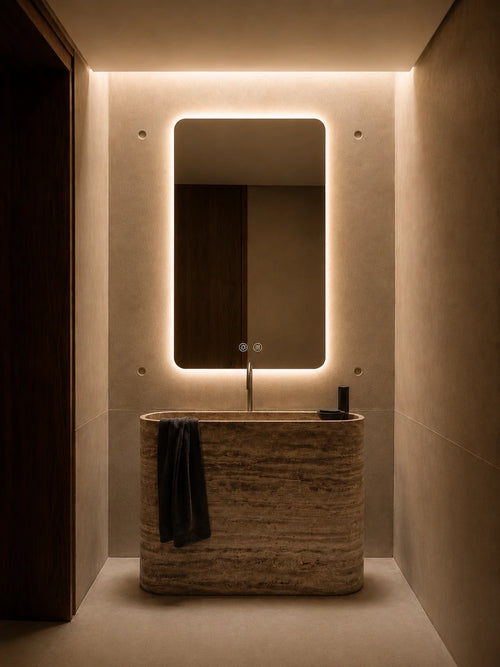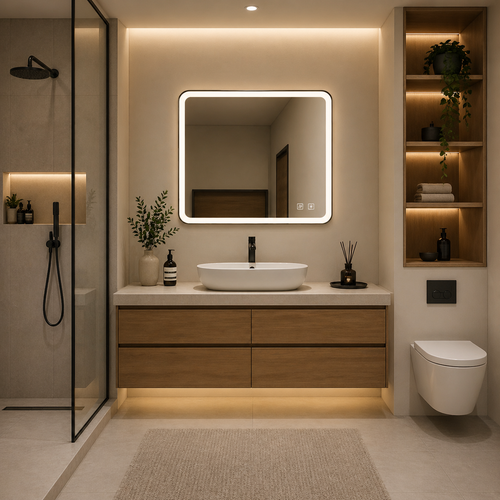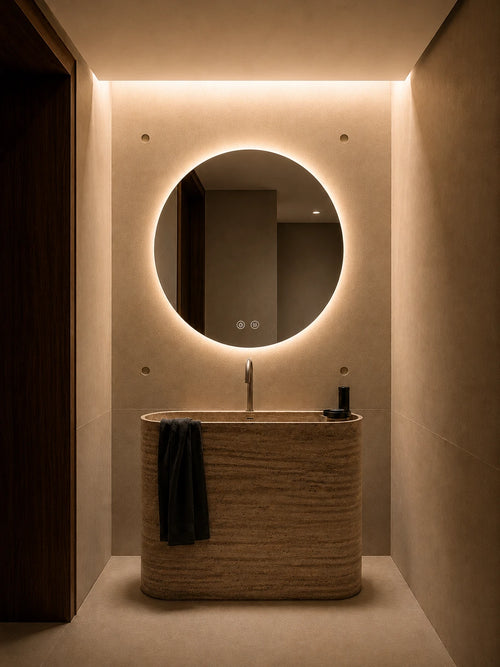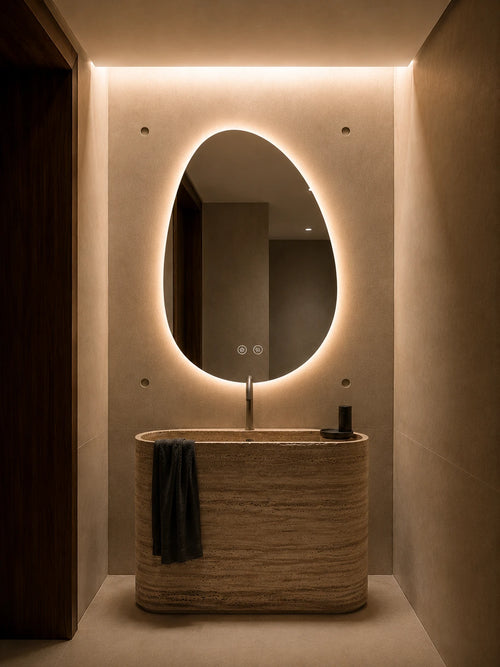

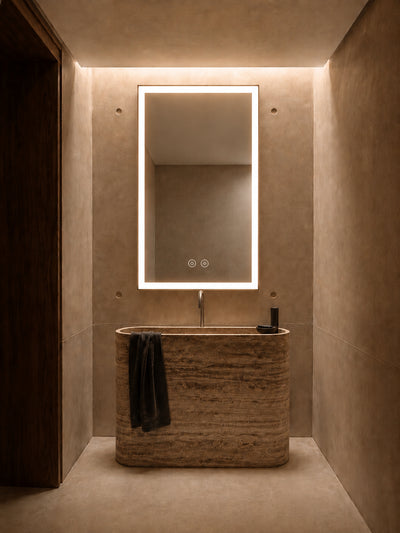

LED bathroom mirrors are becoming popular because they combine everyday functionality with modern lighting. However, before purchasing one, many homeowners want to understand how much electricity it consumes and whether it increases monthly bills. A frameless bathroom mirror with LED lighting offers a stylish, energy-efficient option that can enhance bathroom aesthetics while providing practical illumination for everyday grooming. Understanding LED mirror power consumption helps you estimate running costs and choose a suitable mirror for your bathroom. The actual LED mirror power consumption depends on the mirror's size, lighting system, operating hours and additional features such as defoggers. Whether you are considering a compact vanity mirror or a large illuminated bathroom mirror, knowing its wattage can help you make an informed decision. This guide explains electricity usage, monthly costs and the factors that affect the energy consumption of LED mirrors.
How Much Electricity Does an LED Bathroom Mirror Use?
An LED bathroom mirror generally uses electricity to operate its lighting system, touch controls and additional features. The exact consumption varies between models because different mirrors use different LED strips, drivers and heating elements. Similar considerations apply when choosing the full length mirror size, as dimensions, design and lighting features can influence both functionality and suitability for your space.
A smaller mirror may require less power than a larger model with front lighting and backlighting. Similarly, a mirror with an integrated defogger may consume additional electricity when the heating function is switched on.
To understand LED mirror electricity usage, you should first know two basic terms:
-
Watts (W): Measure how much electrical power a device uses while operating.
-
Kilowatt-hours (kWh): Measure the amount of electricity consumed over time. This is the unit generally used on electricity bills.
For example, a 20W LED lighting system operating for three hours consumes 0.06 kWh per day.
This means the electricity requirement depends not only on the mirror's wattage but also on how frequently you use it.
Understanding LED Mirror Wattage
The LED mirror wattage determines the power required to operate its lighting system. However, there is no single wattage that applies to every bathroom mirror, as power consumption varies depending on its dimensions, lighting design and additional features. Choosing the mirror standard size suitable for your bathroom can help ensure balanced illumination and practical everyday use.
The size of the mirror, number of LED strips, brightness and additional functions can all influence its power requirements.
Here is an illustrative comparison of LED lighting wattages:
|
LED Lighting Wattage |
Daily Usage (3 Hours) |
Monthly Consumption |
|
10W |
0.03 kWh |
0.9 kWh |
|
15W |
0.045 kWh |
1.35 kWh |
|
20W |
0.06 kWh |
1.8 kWh |
|
30W |
0.09 kWh |
2.7 kWh |
|
40W |
0.12 kWh |
3.6 kWh |
These figures are examples for LED lighting alone, not the confirmed wattage of a particular Artessa mirror.
Before purchasing, check the manufacturer's product specifications or electrical rating label to identify the actual power requirements.
How to Calculate LED Mirror Monthly Electricity Cost?
Calculating the monthly running cost of an LED mirror is relatively simple. You only need to know its wattage, daily operating hours and electricity tariff.
Use this formula:
Monthly Electricity Consumption = (Wattage × Daily Usage Hours × 30) ÷ 1000
To calculate the estimated cost:
Monthly Electricity Cost = Monthly Consumption (kWh) × Electricity Rate Per Unit
For example, suppose your bathroom mirror has a 20W LED lighting system and you use it for three hours every day.
|
Calculation |
Result |
|
LED wattage |
20W |
|
Daily usage |
3 hours |
|
Daily consumption |
0.06 kWh |
|
Monthly consumption |
1.8 kWh |
|
Assumed electricity rate |
₹8/unit |
|
Monthly electricity cost |
₹14.40 |
This example shows that a 20W mirror lighting system can have a relatively small monthly running cost.
Your actual bill will depend on your local electricity tariff, usage pattern and other connected features.
Do Additional Features Increase LED Bathroom Mirror Energy Consumption?
Yes. Apart from the lighting system, some bathroom mirrors include additional electrical features that consume power.
Understanding LED bathroom mirror energy consumption requires looking at the complete electrical system rather than considering only the LED lights.
1. Anti-Fog Defogger
An anti-fog system uses a heating pad to reduce condensation on the mirror surface. It can consume more electricity than the LED lighting itself, depending on its wattage and operating duration.
For example, Artessa's Shadex LED mirror includes a 50W touch-activated anti-fog heating pad. If this feature operates for 15 minutes daily, its estimated monthly consumption is:
-
Heating pad wattage: 50W
-
Daily operating time: 0.25 hours
-
Monthly consumption: 0.375 kWh
At an assumed rate of ₹8 per unit, the monthly cost would be approximately ₹3.
This is an illustrative calculation based on the specified heating-pad rating, not a measured consumption figure.
2. Front Lighting and Backlighting
Some LED mirrors feature front lighting, backlighting or a combination of both. Using multiple lighting elements may increase total power consumption.
However, the actual difference depends on the electrical design and wattage of each lighting section.
3. Touch Controls and Memory Functions
Modern mirrors may include touch sensors and memory functions that help control lighting settings. These electronic components generally require relatively little power, although their standby consumption depends on the model.
Are LED Mirrors Energy Efficient?
Yes, LED mirrors can be an energy-efficient lighting option when compared with conventional lighting arrangements that provide similar illumination.
If you are wondering, are led mirrors energy efficient, the answer depends on the quality of the LED system, brightness requirements and operating time.
Some important advantages include:
-
Lower power requirements: LED lighting can provide useful illumination with relatively low wattage.
-
Longer lifespan: Quality LED components are designed for extended use.
-
Reduced heat generation: LEDs generally produce less unwanted heat than traditional incandescent bulbs.
-
Adjustable brightness: Dimming features allow users to reduce illumination when full brightness is unnecessary.
-
Multiple lighting options: Different colour temperatures provide flexibility without requiring separate lighting fixtures.
However, energy efficiency should not be judged by the LED technology alone. Check the mirror's total rated power, including its defogger and other electrical components.
Practical Ways to Reduce LED Mirror Electricity Usage
You do not need to compromise on convenience to manage your bathroom electricity consumption. A few simple habits can help control running costs.
1. Switch Off Lighting When Not Required
Avoid leaving the mirror illuminated throughout the day. Switch it off after completing your grooming routine.
2. Use Adjustable Brightness
If your mirror includes a dimmer, select a comfortable brightness level instead of using maximum illumination every time.
3. Use the Defogger Only When Necessary
Activate the anti-fog function when the mirror becomes foggy rather than keeping the heating pad switched on unnecessarily.
4. Choose the Right Mirror Size
Select a mirror that suits your vanity and lighting requirements. A larger mirror does not automatically mean excessive consumption, but its electrical specifications should be checked.
5. Check the Product Specifications
Compare wattage, lighting output and additional electrical features before purchasing. This helps you understand the expected running cost.
Final Thoughts
LED mirrors can provide practical illumination without significantly increasing household electricity costs. Their actual consumption depends on wattage, operating hours and additional features such as defoggers. Check the product specifications and calculate the estimated monthly usage before purchasing. This will help you choose an LED mirror that balances functionality, design and electricity expenses.
Frequently Asked Questions
Q1. How much electricity does an LED bathroom mirror consume?
Electricity consumption depends on the mirror's wattage and daily operating hours. For example, a 20W LED lighting system used for three hours daily consumes approximately 1.8 kWh per month.
Q2. What is the average LED mirror wattage?
There is no fixed wattage for every LED mirror. It varies according to mirror dimensions, lighting configuration and additional features. Always check the manufacturer's electrical specifications.
Q3. How can I calculate LED mirror monthly electricity cost?
Multiply the mirror's wattage by its daily operating hours and 30, then divide by 1,000. Multiply the resulting monthly units by your electricity tariff to calculate the estimated cost.
Q4. Does an anti-fog feature increase LED bathroom mirror energy consumption?
Yes. An anti-fog heating pad uses additional electricity because it generates heat to reduce condensation. Its contribution to the electricity bill depends on its wattage and operating duration.
Q5. Are LED mirrors energy efficient compared with traditional bathroom lighting?
Yes, LED mirrors can be energy efficient because LED technology generally provides good illumination with relatively low power consumption. However, compare total wattage and additional features before making a purchase.